
Introduction
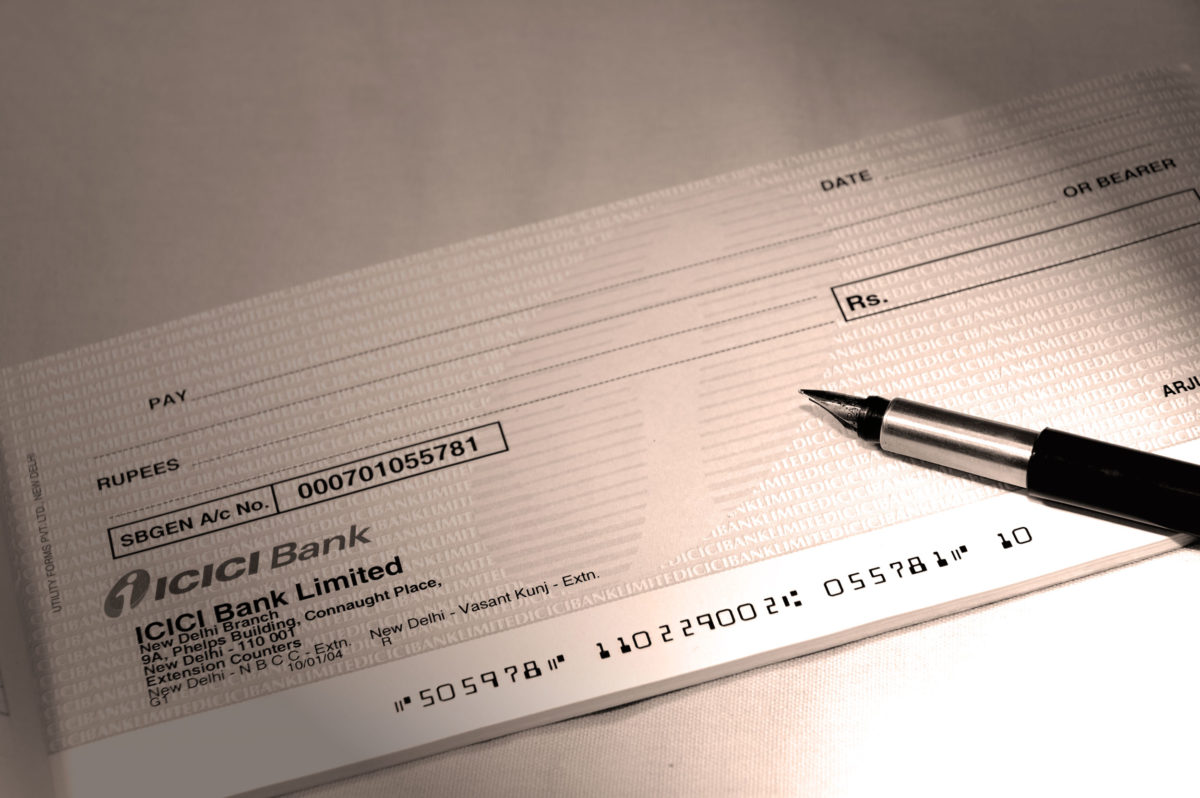
In the commercial landscape, the most often used instruments to make a payment are cheques. The industries are moving towards digital advancement and using digital modes for payments, however cheques used for making payments still remain vital in personal as well as business relations. The person who draws the cheque, also known as the drawer, has to face legal action when a cheque bounces. It is important to have sufficient funds in the bank account when a cheque is issued by the drawer, so the cheque will not be rejected by the bank in any situation.
Section 138 of Negotiable Instruments Act, 1881
Meaning and scope of Section 138
Section 138 of the Negotiable Instruments Act, 1881 is an important legal provision which addresses the dishonour of cheques if there are insufficient funds or other reasons. This provision criminalizes the act when a cheque is issued and is then dishonoured. The main aim of this legal provision is to ensure the credibility of cheques when they are used for payment and to ensure there is financial discipline in businesses and individuals.
If any party fails to comply with the conditions mentioned in the Section 138 of Negotiable Instruments Act, 1881 then it may result in an imprisonment which can be extended for two years along with a fine which will be twice the amount mentioned in the cheque or both.
Essential ingredients to prove a Section 138 offence
Some of the essential ingredients to prove Section 138 offence are:
Issuance of cheque
A cheque must be issued by the drawer (the person signing the cheque) on their bank account.
Cheque for debt/Liability
The cheque must be issued to discharge a debt or liability.
Cheque presentation
The cheque must be presented to the bank within a specified period, typically within three months of the cheque’s date or its validity period, whichever is earlier.
Dishonour of cheque
The cheque must be dishonoured (returned unpaid) by the bank due to insufficient funds or exceeding the authorized amount.
Legal notice
A written legal notice must be served by the payee (the person to whom the cheque is issued) to the drawer, demanding payment within 30 days of the dishonour of the cheque.
Failure to pay
The drawer must fail to make payment to the payee within 15 days of receiving the legal notice.
Complaint filing
A complaint must be filed with the court within a specified period, typically within one month of the expiry of the 15-day payment period.
Potential causes which result into cheque bounce
There are various reasons due to which a cheque bounce can occur like:
- The balance in the account is insufficient.
- The cheque is submitted by the date on which it was passed.
- There is some damage on the cheque.
- The signature on the cheque is mismatched, illegible,or is missed.
- If there is any kind of over writing done on the cheque.
- If there are any inconsistencies between the amount written in number and in words.
Simultaneous proceedings for civil suits and criminal complaints under Section 138 maintainable
In the landmark judgment of Sri Lalji Kesha Vaid vs. Dayanand R (2024) the Supreme Court held that A person can file both a civil case (to recover money) and a criminal complaint under Section 138 of the Negotiable Instruments Act (for cheque bounce) at the same time, even if both spring from the same cause of action. The law allows both actions to happen together.
Facts of the case
Sri Lalji Kesha Vaid (the petitioner) and Dayanand R. (the respondent) were longtime colleagues. They first worked together at Hi-Tech Computer and later at Venus Office Needs, a business started by the petitioner. During a financial transaction, the respondent lent ₹5 lakhs to the petitioner. To secure this loan, the petitioner handed over a blank, signed cheque to the respondent.
Later, the petitioner claimed he had repaid the full ₹5 lakhs in cash, but the respondent did not return the blank cheque. This led to a dispute. The respondent filed a civil suit to recover the money and also filed a criminal complaint under Section 138 of the Negotiable Instruments Act, 1881 (NI Act), alleging that the cheque had bounced. A Magistrate took note of the criminal complaint and issued summons to the petitioner. The petitioner then approached the Karnataka High Court by filing a criminal petition, challenging the summons and the criminal case.
Key issues involved in the case of Sri Lalji Kesha Vaid vs. Dayanand R (2024)
- Whether a criminal complaint under Section 138 of the NI Act can be filed even when a civil suit is already ongoing for the same issue?
- Whether the availability of a civil remedy stops an individual from also starting a criminal case under Section 138?
Arguments from both parties in Sri Lalji Kesha Vaid vs. Dayanand R (2024)
Petitioner
It was argued by the petitioner that the cheque was only meant to be security, not actual payment. Since he already repaid the money in cash, the cheque should not have been used. Also, since the respondent had already filed a civil case, filing a criminal complaint was a misuse of the law.
Respondent
The respondent argued that the cheque was given to repay a legally enforceable debt, and even if a civil case was filed, it didn’t stop him from using his criminal remedy under Section 138. Both legal routes can be used at the same time.
Judgement in Sri Lalji Kesha Vaid vs. Dayanand R (2024)
The High Court of Karnataka dismissed the petitioner’s challenge and allowed the criminal case under Section 138 to continue.
Justice M. Nagaprasanna made it clear that filing a civil suit doesn’t stop someone from filing a criminal complaint under Section 138, even if both are based on the same facts.
The Court referred to past Supreme Court rulings:
- In D. Purushotama Reddy & Anr vs. K Sateesh (2008), it was held that civil and criminal proceedings for the same issue can go on at the same time.
- In Vishnu Dutt Sharma vs. Daya Sapra (2009), the Supreme Court explained that decisions made in civil courts don’t control what criminal courts decide, and vice versa.
- In CREF Finance Ltd. vs. Sree Shanthi Homes Pvt. Ltd. & Anr (2005), it was confirmed that civil and criminal proceedings for the same matter can run parallel.
Advantages of using Section 138 NI Act
The benefits of filing a complaint under Section 138 of Negotiable Instruments Act, 1881 are:
Puts legal pressure on the person who issued the cheque
When a complaint is filed, it starts a criminal case against the person who gave the dishonoured cheque. This often pushes them to settle the matter quickly to avoid further legal trouble.
Faster court process
Cases under Section 138 are handled through a summary trial, which means the procedure is quicker than regular court cases. This helps in getting timely justice.
Discourages cheque bounce incidents
The fear of legal consequences discourages people from issuing cheques without keeping enough balance in their accounts, ensuring more responsible financial dealings.
Legal right of complainant
The complainant has the legal right to claim the cheque amount, and in some cases, can also get interest and legal expenses reimbursed by the accused.
Stronger position for settlement
Since the accused can face jail time or a heavy fine, the law gives the complainant a strong position to negotiate and recover the money quickly.
Legal draft for notice under Section 138 NI Act
Re: Notice u/s 138 of the Negotiable Instruments Act, 1881 in respect of your Loan Account No __________.
Dear Sir,
Under specific instructions of and on behalf of our clients, ABC, having their office at_____________________________________________________________ we address you as follows:-
- That you had approached our client for the grant of a loan. Correspondingly, our client had agreed to grant you the said loan/finance facility and accordingly, a written Loan Agreement was executed between you and our client.
- That as per the stipulated terms and conditions envisaged in the Agreement above mentioned, you were bound to repay the said loan along with interest and other applicable charges on time, as per the schedule of payment, as agreed between you, and our client.
- That in discharge of your liability as aforementioned, you issued, the following cheque(s) in favor of our client:
Cheque Nos.____________
Dated Amount (Rs) _____________________
The above cheque(s) was/were drawn on XYZ Bank.
- The above mentioned cheque on due presentation through our clients bankers i.e XYZ BANK, to your bankers for realization was returned unpaid by your Bankers vide cheque return memo dated XYZ with the endorsement “INSUFFICIENT FUNDS” intimation of such dishonor was received subsequently by our clients.
- That your action in allowing the cheque to return unpaid on presentation goes to show that you had intentionally, malafidely with a criminal intention and in order to defraud our clients, issued the cheque, knowing fully well that the said cheque will not be honored on presentation and never made any attempt to facilitate the encashment of the same.
- We bring to your notice that the cheque issued in payment of a debt, if returned unpaid and after receiving and after receiving notice under section 138, within 15 days of the receipt of such notice, if the entire payment is not made to our clients, you will be deemed to have committed a criminal offence punishable under section 138 read with section 142 of the Negotiable Instruments Act, 1881 as amended up to date which prescribes, on conviction “a jail term up to two years and / or fine up to double the amount of the cheque so returned, or with both.”
- In view of the aforesaid, we on behalf of our clients, do hereby call upon you and demand you to pay our clients. The said dishonored cheque by pay-order or bank-draft or cash within 15 days of receipt of this notice, failing which, our clients will be constrained to institute legal proceedings against you under the provisions of section 138 of the Negotiable Instruments Act, 1881 and on your failure to comply with the aforesaid, proceedings under the provisions of Negotiable Instruments Act shall be initiated against you without any further notice to you.
- This notice is issued without prejudice to our client’s rights, contentions and claims to take further civil action separately against you for the recovery of the entire amount outstanding on your account with interest.
Advocates
Key takeaways
Section 138 of the Negotiable Instruments Act, 1881 helps in maintaining discipline in the financial sector in the business field. It is an essential legal process as both civil and criminal elements hence it is vital for both the parties involved to understand defences, documents and steps involved. The person has to be aware of where the complaint has to be filed. The person accused should respond quickly and look into all possible defenses or try to settle the matter. Getting legal help at every stage from sending a notice to going to court or settling is important to get the best result.
Frequently asked questions (FAQs)
What is the limitation of the cheque bounce case?
The limitation period of cheque bounce cases is 30 days.
Who gets charged if a check bounces?
When a check bounces, both the person who wrote the check and the person who received it may have to pay extra fees.
What happens if a cheque bounces due to a signature mismatch?
The drawer of the cheque (cheque issuer) will face criminal charges if the cheque bounces due to signature mismatch as it is considered as an offence by the Supreme Court.
References
- https://timesofindia.indiatimes.com/city/bengaluru/karnataka-hc-rules-both-cheque-bounce-and-recovery-cases-can-proceed-simultaneously/articleshow/114664093.cms
- https://papers.ssrn.com/sol3/papers.cfm?abstract_id=5159907
- https://www.researchgate.net/publication/390821902_Harnessing_Legal_and_Technological_Frameworks_to_Combat_Unlicensed_Money_Lending_and_Enhance_Tax_Compliance_An_Examination_of_Cheque_Bounce_Cases_and_Civil_Suits_as_Tools_for_Identifying_and_Curbing
- https://www.lawjournals.org/assets/archives/2016/vol2issue6/2-5-44-192.pdf
- https://www.lexology.com/library/detail.aspx?g=c1f86808-e817-4ed7-ab7a-b6361d5c3c64

