
Introduction
The Shayara Bano case on triple talaq highlights how the judiciary plays a key role in balancing personal laws with the constitutional promise of equality and dignity. Today, women’s rights under Muslim personal law are a highly debated issue. In particular, rights related to triple talaq divorce, inheritance, and maintenance have received a lot of attention. The Indian Constitution guarantees equality and protection from discrimination based on gender or religion, yet many practices still continue due to conservative cultural norms.
Many of Muslim personal law remains unmodified, and courts have often relied on interpretations of the Quran and Hadith in their decisions. In a landmark judgment, the Supreme Court declared triple talaq (talaq-e-biddat) unconstitutional and clearly arbitrary, holding that it is not protected under the exceptions provided in Article 25 of the Constitution.
Triple talaq in India
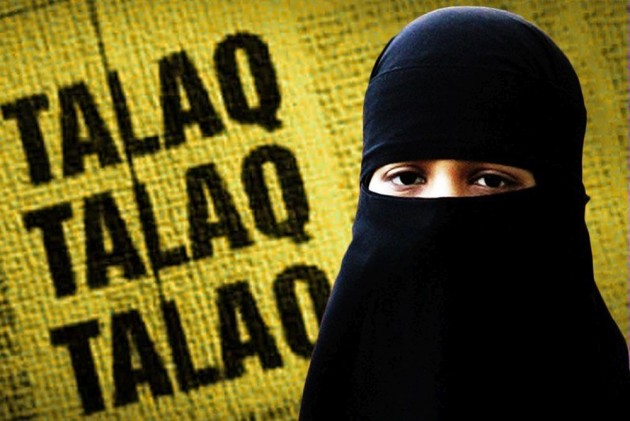
Triple talaq also known as talaq-e-biddat has been one of the most controversial parts of the Muslim personal law since a long time in India. This practice allows a Muslim man to divorce his wife by simply saying the word ‘talaq’ three times. It can be in writing or verbally. The main controversial part is that this type of divorce is immediate and does not require the wife’s consent. It is arbitrary and one sided in nature.
In the landmark case of Shayara Bano vs. Union of India (2017), the Supreme Court of India declared that triple talaq is unconstitutional in nature. The court stated that this form of talaq violates the fundamental rights of the Muslim women and is against gender equality principles. Muslim women have for many years lived in the fear that their husband can end their marriage within a few seconds by simply saying “talaq” three times.
Relevant constitutional provisions and personal laws
Personal laws may follow religious and cultural traditions, but they cannot go against the Constitution, which protects everyone’s rights and ensures equality under the law.
Constitutional provisions
Article 25 of the Indian Constitution
Article 25 talks about the freedom of religion. This article guarantees that freedom to practice any religion however it is subject to health, public morality, public order and other fundamental rights. If any religious practice harms any individual or violates their fundamental rights then it shall not be protected under this article.
Article 13 of the Indian Constitution
Section 2 of the Muslim Personal Law (Shariat) Application Act of 1937, which recognized triple talaq as a statutory right, falls under Article 13. Article 13 mandates that all laws, whether pre- or post-Constitution, must conform to fundamental rights.
Article 14 of the Indian Constitution
Article 14 ensures that there is equality before law and it also prohibits discrimination. This right is violated as triple talaq is arbitrary and unilateral in nature.
Article 15 of the Indian Constitution
This article states that there should no discrimination on the basis of sex, caste, religion, birth place. As triple talaq discriminates between Muslim men and women, Article 15 is breached.
Article 21 of the Indian Constitution
This article talks about the right to life and personal liberty. The right to live with dignity is also included in this right which is violated by triple talaq.
Personal laws and Triple Talaq
There are different personal laws which are recognised in India for various religions. Matters like marriage, divorce, maintenance, child custody, succession and adoption are governed by personal laws in India. Many parts of the personal laws are shaped by male centric interpretations rather than religious mandates.
Personal laws including Hindu, Muslims, Jewish have entrenched male privileges. These laws often discriminate against women when it comes to divorce, marriages, inheritance etc. these practices collide with principles of gender equality.
The Muslim Personal Law (Shariat) Application Act of 1937 accepted certain practices, including triple talaq. Triple talaq, also called talaq-e-biddat, lets a Muslim man divorce his wife instantly, without her agreement or even being present. While some people saw it as part of religious freedom, this way of divorcing was one-sided, unfair, and often criticized for harming women’s rights and dignity.
Over the time, the courts have started to gradually examine the personal laws which are discriminatory in nature. The courts are giving landmark judgments including Shamim Ara vs. State of U.P. (2002) and later Shayara Bano vs. Union of India (2017). These cases showed that personal laws need to change over time to ensure fairness, equality, and respect, removing unfair practices while keeping the good ones. The Supreme Court and other courts have made it clear that personal laws must follow the Constitution. They can be reviewed to make sure they do not violate people’s rights or fairness.
Judicial intervention: Key cases leading up to the Supreme Court
Mohd. Ahmed Khan vs. Shah Bano Begum And Ors (1985)
This landmark case, despite not being related to triple talaq, showed the need for reform in th Muslim Personal Laws in India. Shah Bano was awarded maintenance by the Supreme Court in this case after her husband had divorced her.This case has sparked a nationwide debate on rights of the Muslim women within the Muslim Personal Laws.
Dania Sultana case
Dania Sultana had challenged the ruling of the Supreme Court which led to the government introducing the triple talaq Bill. The court supported the government’s move to make triple talaq a punishable offense, reinforcing the laws that protect women from this practice.
Mst. Zohara Khatoon vs. Mohd. Ibrahim (1981)
In this ruling it was held by the court that tripe talaq is one of the most immoral and sinful forms of divorce, because it gives the husband the unilateral power to end the marriage without the consent of the wife. This case acted as a turning point and raised many questions on the legality of such divorce in India. The court also stated that triple talaq is not a fundamental part of Muslim personal law, hence it is not protected under the Constitution’s Article 25.
Over the years, the Supreme Court repeatedly questioned the practice of instant triple talaq, and finally, it led to a historic win for Muslim women’s rights.
Landmark Supreme Court judgement on Triple Talaq
Facts of the case
Shayara Bano and her husband Rizwan Ahmed got married in 2002 in Uttar Pradesh At the time of marriage, the husband had compelled Shayara’s family to give dowry. The wife was abused, drugged and eventually abandoned by the husband and her family when she got sick and her family no longer gave additional dowry as demanded.
Rizwan Ahmed divorced Shayara through triple talaq. This practice was considered religious wherein the man can divorce his wife by saying talaq three times. This practice does not require the consent of the wife. A writ petition was filed by Shayara Bano in Apex Court in 2016 challenging the constitutionality of talaq-e-bidat, nikah-halala and polygamy.
Issues raised before the court
- Whether the practice of triple talaq (talaq-e-bidat) an essential part of Islam?
- Whether the fundamental rights have been violated with the practice of triple talaq?
- Whether Article 25 of the Indian Constitution protects triple talaq?
Arguments presented by petitioners and respondents
Petitioner’s arguments
The petitioner argued that the triple talaq given by her husband is not valid in nature as it is not considered a part of Shariat. As per the Shariat Act, instant divorce cannot be considered as a rule of decision. Triple talaq violates the fundamental rights of muslim women which are guaranteed under Article 14, 15 and 21 of the Indian Constitution.
The petitioner further argued that the practice of talaq-e-biddat (instant triple talaq) cannot be justified or protected under Articles 25(1), 26(b), or 29 of the Constitution, which deal with religious freedom and rights of communities.Instant triple talaq has been rejected in many countries around the world, including several Muslim-majority nations.
Respondent’s arguments
The respondent argued that matters of faith and religious practices should be understood in the context of how each community follows them, keeping in mind different aspects of personal law. However, personal laws are secondary to legislation and apply only when there is no specific law made by Parliament.
The question of whether instant triple talaq is valid falls under legislative policy and, ideally, should not be decided by the courts. Also, Fundamental Rights under Part III of the Constitution, such as Articles 14, 15, and 21, apply only to actions of the State. It was further argued that since the personal laws do not come from any law or State action, they cannot be directly challenged under these constitutional rights.
Court’s observations and legal reasoning
Triple talaq was considered unconstitutional by a 3:2 majority. The majority held that triple talaq was not protected under the Article 25 of the Constitution and was also not considered a significant part of Islam. The Supreme Court observed that the practice of triple talaq is against the practices of Shariat and the tenets of Quran and hence could not be protected as a fundamental right in the country. Triple talaq was also arbitrary in nature.
The Supreme Court said that triple talaq is unfair because it allows a Muslim man to end his marriage suddenly and without any effort to resolve problems. This makes it arbitrary and against the right to equality under Article 14 of the Constitution. The Court also ruled that the 1937 Muslim Personal Law (Shariat) Act, which gave legal backing to triple talaq, is invalid to the extent that it supports this practice.
The government was asked to make laws in order to regulate divorce as per the judgement. However, from the bench of five judges there were two judges (Chief Justice J.S. Khehar and Justice Abdul Nazeer) who believed that despite triple talaq being arbitrary practice the Supreme Court does not hold the power to strike this practice down and it was the responsibility of the Parliament to pass a necessary law on this.
Final judgement and its implications for Indian jurisprudence
The Supreme Court on 22 August, 2017 gave the final judgement in this landmark case. It was a bench of five judges which consisted of Chief Justice Jagadish Singh Khehar Justice U.U. Lalit, Justice Abdul Nazeer, Justice Kurian Joseph, and Justice Rohinton Nariman. The court declared triple talaq unconstitutional.
Legislative response to the Supreme Court ruling
Triple talaq Bill, 2019
Both the houses of the Parliament had successfully passed the triple talaq Bill, 2019 which was enacted as Muslim Women (Protection of Rights on Marriage) Act, 2019. This act is also referred to as the triple talaq Act of 2019. triple talaq was made a cognizable offence and non-bailable with this Act. The penalty for this offence is imprisonment upto 3 years and fine. This Act also ensured that the women who were divorced received subsistence maintenance and custody of their minor children.
Muslim Women (Protection of Rights on Marriage) Act, 2019
This Act criminalises triple talaq in India. The key provisions of of Muslim Women (Protection of Rights on Marriage) Act, 2019 are:
Key provisions of Muslim Women (Protection of Rights on Marriage) Act, 2019
Section 3 of Muslim Women (Protection of Rights on Marriage) Act, 2019
This section states that if the Muslim husband gives his wife a triple talaq it would be considered illegal and void irrespective of the form in which the divorce is given.
Section 4 of Muslim Women (Protection of Rights on Marriage) Act, 2019
The section states the punishment for giving a triple talaq as the practice is not considered a cognisable offence. The imprisonment is upto three years along with a fine for the husband who gives his wife triple talaq.
Section 5 of Muslim Women (Protection of Rights on Marriage) Act, 2019
This section gives the right to financial allowances to the divorced wife and her dependent children.
Section 6 of Muslim Women (Protection of Rights on Marriage) Act, 2019
This section grants custody of the minor children to the wife.
Challenges in enforcement and judicial review post-legislation
Triple talaq is illegal, but it can be difficult to determine when someone has truly given a verbal divorce, particularly if the spouse denies it. Many Muslim women still do not know their rights or the legislation, which prevents them from receiving the assistance they need.
Due to limited access to legal and counseling services, women in outlying regions face even more challenges. Another challenge is that the law is occasionally abused, with complaints being made more for personal resentment than actual triple talaq incidents. This rule is also opposed by several religious organizations and leaders who claim it impedes individual religious activities.
Comparative and global perspectives on triple talaq
Triple talaq has been debated worldwide, with different Muslim countries making changes based on their own traditions and laws. In India, it was once allowed under the Hanafi school, but the Supreme Court’s Shayara Bano judgment and the 2019 law banned it to protect women’s rights. In Indonesia, divorces must go through religious courts, which ensures fairness and secures women’s legal and financial rights. Overall, most countries have rejected or reformed triple talaq, as it goes against women’s dignity, equality, and justice.
Impact on gender justice and family law practice
Gender justice is negatively impacted by triple talaq as it violated the rights of the Muslim women to dignity and equality. The Muslim men are given one-sided power which leaves the women in a vulnerable state. They become targets of emotional distress, financial hardship and social stigma. Triple talaq is against constitutional principles of equality and secularism.
The ban on the practice of triple talaq has shifted the family law to great extent from religious custom to statutory law. This helped in strengthening the legal protection of women. As triple talaq is now criminalised and anyone following this practice is liable to imprisonment and penalty. The successful ban however can be made effective on the proper implementation and spreading awareness regarding it.
Conclusion
The Shayara Bano case was a big step in protecting Muslim women from unfair divorce. The Supreme Court said triple talaq is unconstitutional because it goes against equality and dignity. The 2019 law now gives women legal protection and support after divorce. This case is an important move toward fairness and justice for women in family matters.
References
- https://vidhiparivartan.co.in/wp-content/uploads/2021/06/Paper-6.pdf
- https://ijcrt.org/papers/IJCRT1704301.pdf
- https://repository.nls.ac.in/cgi/viewcontent.cgi?article=1099&context=slr
- https://www.criminallawjournal.org/article/59/3-2-10-444.pdf
- https://www.sci.gov.in/
- https://ijlsi.com/wp-content/uploads/Criminalization-of-Triple-Talaq.pdf

